
Storytelling · Winter 2026
Harvest Moon: Keeper of stories
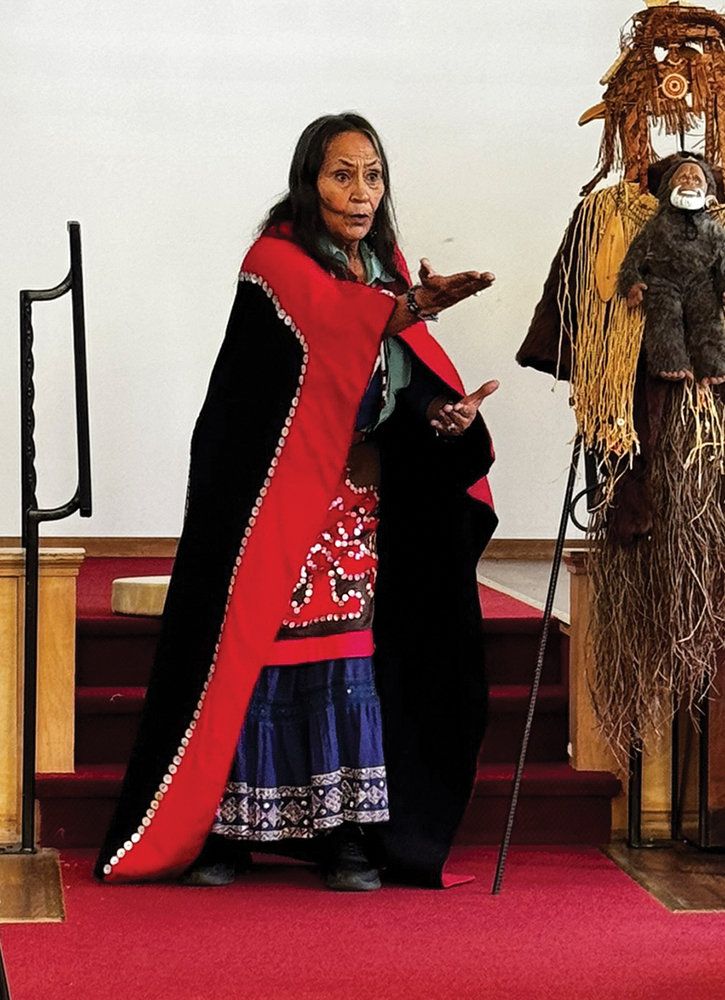
Quinault storyteller Harvest Moon keeps Coastal Salish legends alive, taking the pulse of each audience as she moves from legend to legend.
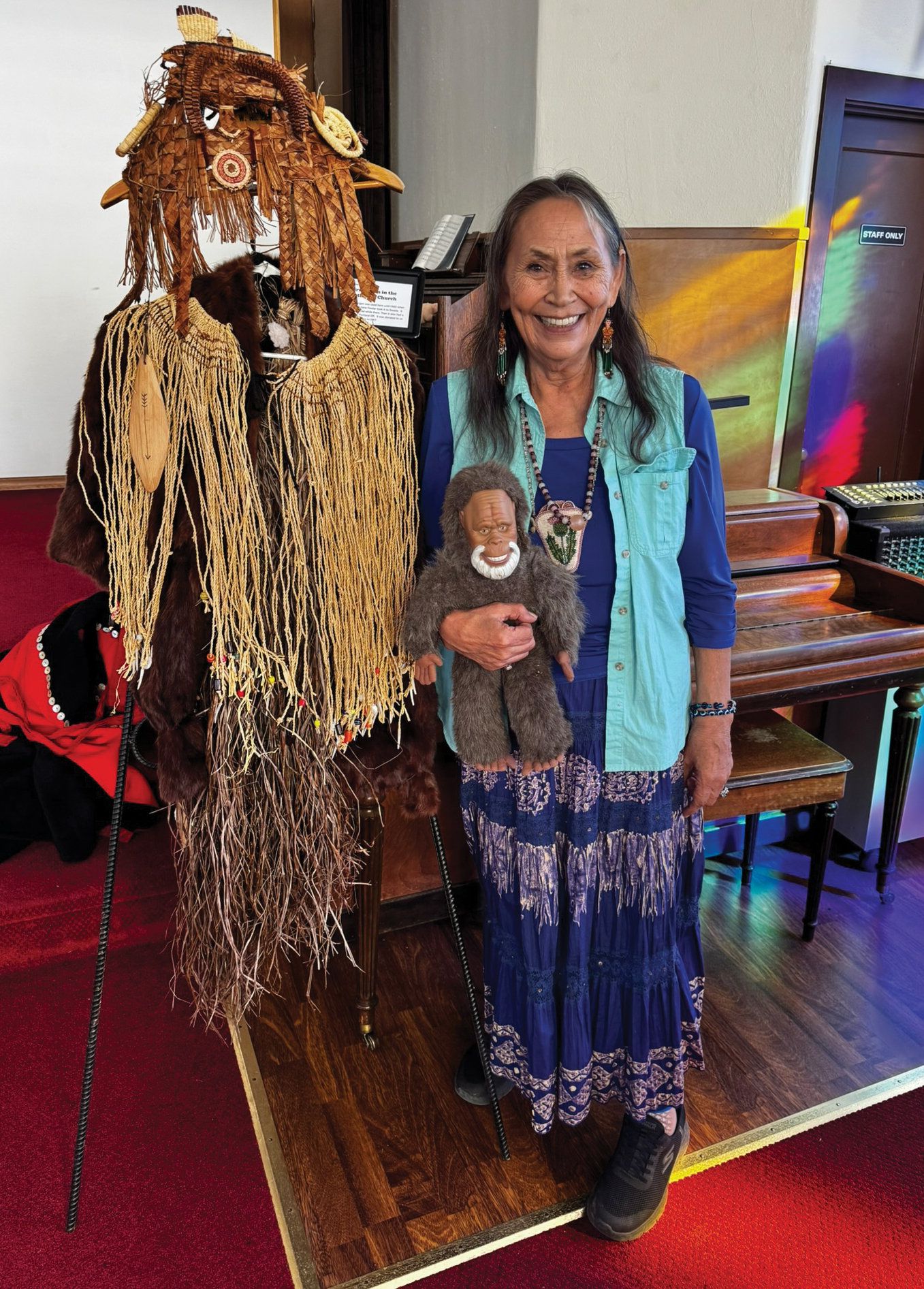
“Long ago, there was a very prestigious young chief. Whenever he talked, he talked with his heart, and whenever he listened, he listened with his mind…”
So begins the “Dog Legend,” or “The Dog’s Potlatch,” a traditional Native American legend masterfully performed by Quinault storyteller Harvest Moon. As she speaks, she transitions from teacher to storyteller, entrancing the audience with the texture of her voice, with every movement of her hands, each lift of an eyebrow. With this opening story, she takes the pulse of her listeners, adapting the remaining program accordingly.
“The Dog Legend is my tester,” explained Harvest Moon, who lives in Pacific Beach. “I’m testing the audience, giving them time to open their ears.”
“The Dog Legend is my tester. I’m testing the audience, giving them time to open their ears.”
Harvest Moon
The audience settles in, captivated, and the storyteller moves from legend to legend.
She shares Native American legends of Bigfoot and the Salish woolly dogs and Glukeek, the monster in the berry patch. And she retells the legend of Culty, a story originally told by her great-great-grandfather, Charles Culty, in the late 1800s.
Born Stephanie Elaine Culty to Native parents during the time of the Indian Adoption Project of the 1950s and 60s, Harvest Moon was removed from her birth family and adopted out to non-Native parents, growing up as Dorothy Ellen Rosina.
“My adoptive parents were parents tenfold,” remembered Harvest Moon, now 70. “They loved me and raised me with a foundation of a secure life.”
When she started kindergarten, her parents realized the time had come to let her know that she was adopted. It took a couple of weeks to convince her that she was Native American. But over the years, Harvest Moon began to embrace her Native heritage, and the storyteller in her started to emerge.
She pored over the handful of Northwest Coast books in her local library and learned public speaking through 4-H. And she practiced lying, a surprisingly good training ground for a storyteller.
“I did a lot of lying,” she laughed. “But it was fun lying, not a vicious lie. I wanted to be liked, and everyone knew I was a BS-er.”
When she reached puberty, Harvest Moon’s adoptive mother shared with her a piece of paper on which her grandfather had written, “When she starts her menstrual cycle, let her know that her Native name is Harvest Moon.” For the teenager, this new name brought the two halves of her life together into a whole, the half moon of Stephanie Culty joining with the half moon of Dorothy Rosina.
At 19, Harvest Moon gave birth to both her oldest son and her life’s work. She opened her adoption papers and started to embrace her Native roots, connecting with the Culty family and learning the art of basket weaving. At that time, Native basket weavers held their techniques as secret as Grandma’s apple pie recipe. But instructive books like Hilary Stewart’s “Cedar” proved invaluable. And as Harvest Moon engaged more with her Quinault people, she discovered basketry mentors in her cousin, Richard Culty, as well as masters such as Hazel Underwood.
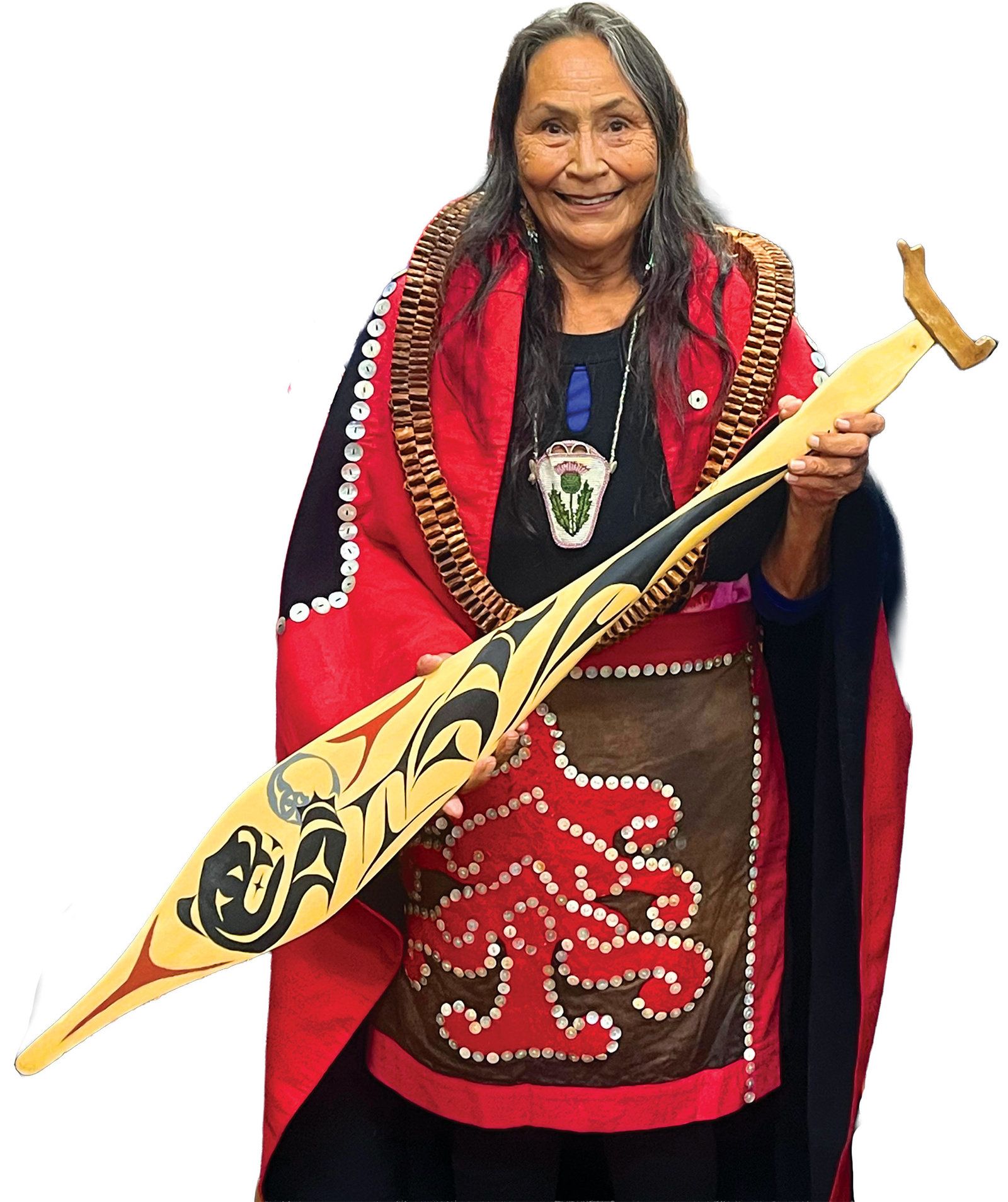
Shy by nature, she found basket weaving the perfect occupation for an introvert, and she became an accomplished master basket weaver. But she soon found that basket makers also often became storytellers.
“Back in the long houses, the basket makers were always located closest to the fire on long winter nights so that they could weave their baskets,” she recounted. “Just like today, the people were captivated by what the basket maker was making, thus ensuring a captive audience. And so, the basket maker, nine chances out of ten, was the storyteller.”
Harvest Moon loved making baskets at airports. People would gather around, asking questions, and she would begin to share the stories. Eventually, she caught the attention of a woman involved with the Treasure Trunk program of the Washington State History Museum. The woman suggested that she join the program, and she took Harvest Moon to meet a prominent Native storyteller and artist called Lelooska.
Under Lelooska’s mentorship, and with her Great-Great-Grandfather Culty’s storytelling blood in her veins, Harvest Moon grew into an inherited storyteller, a keeper of the traditional stories. More than an entertainer, an inherited storyteller functions as a communal archivist with a responsibility to teach.
“In this day and age, to experience an inherited storyteller is about as rare as seeing a baby Bigfoot,” Harvest Moon pointed out.
“In this day and age, to experience an inherited storyteller is about as rare as seeing a baby Bigfoot.”
Harvest Moon
She takes the responsibility and the weight of her calling seriously. For more than three decades Harvest Moon has traveled throughout the Pacific Northwest and even across the world, sharing the legends and rich culture of the Coastal Salish peoples. She has described herself as the storytelling version of a one-man band, with a backpack of techniques that include sounds, humor, history, morals, songs and more.
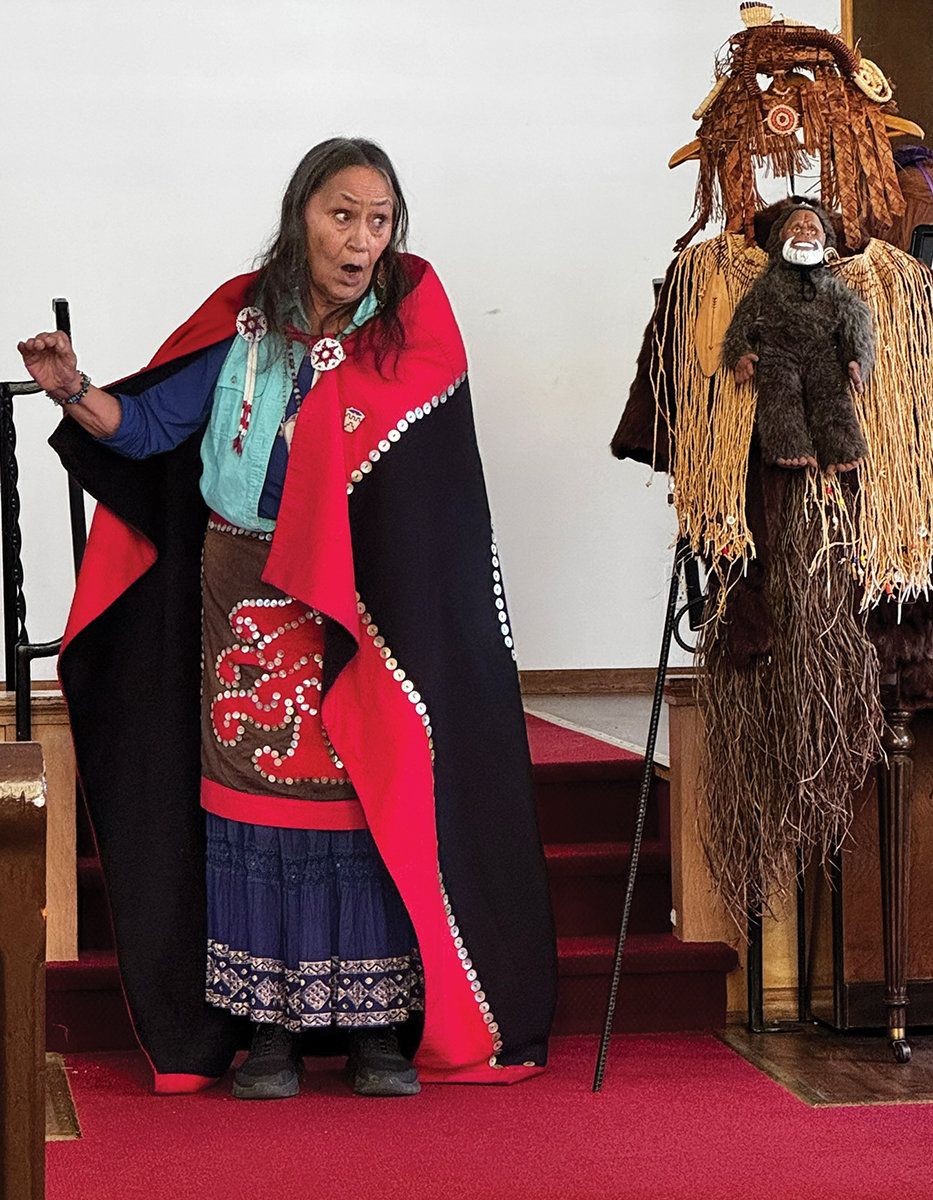
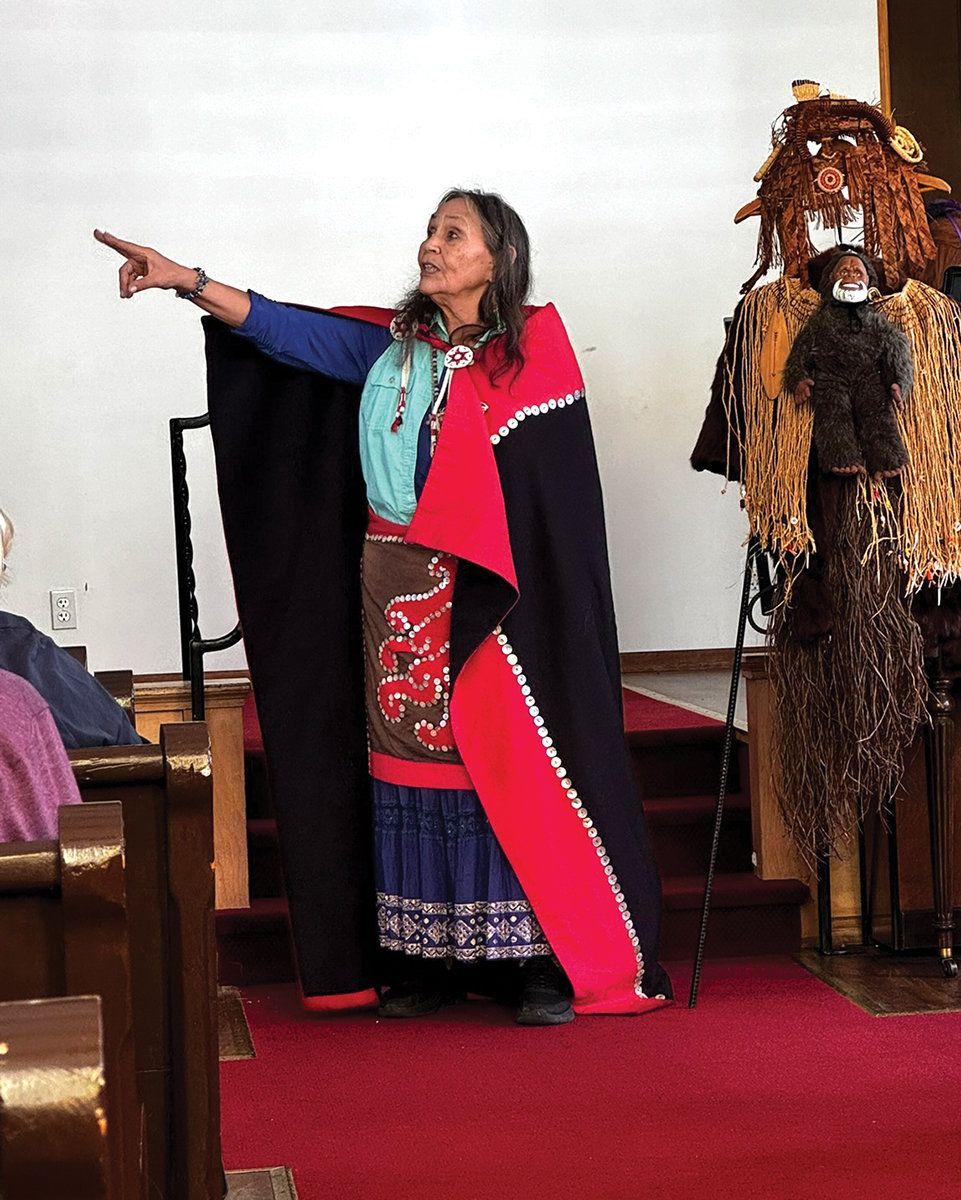
Anyone privileged to sit in the audience at one of Harvest Moon’s programs might be surprised to learn that her high school graduating class voted her the “most shy.” She has mastered her craft, drawing listeners into the story in a way that no TV show or movie can ever achieve.
Once, during an artist-in-residency program, a young schoolgirl sat enthralled by the performance, afterward announcing, “When I grow up, I want to be just like Harvest Moon.”
“That’s my million dollars right there. That’s how I really get paid,” emphasized the storyteller. “I want people to know that I’m richer than Bill Gates and all the rich people in the world.”
To learn more about Harvest Moon and experience her storytelling, visit her website at iamharvestmoon.com or search YouTube for “Harvest Moon storyteller.”